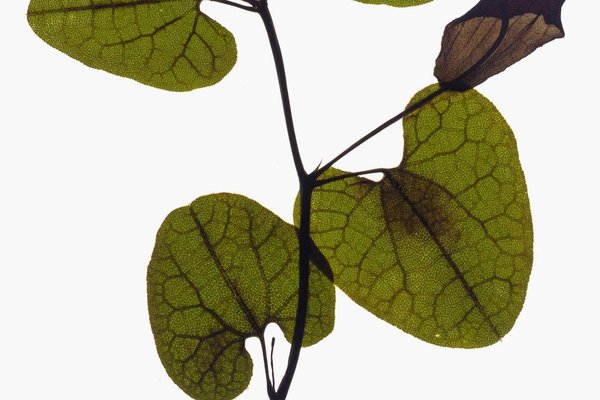
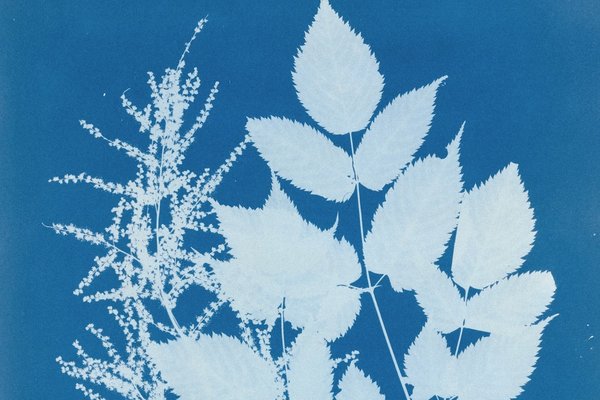
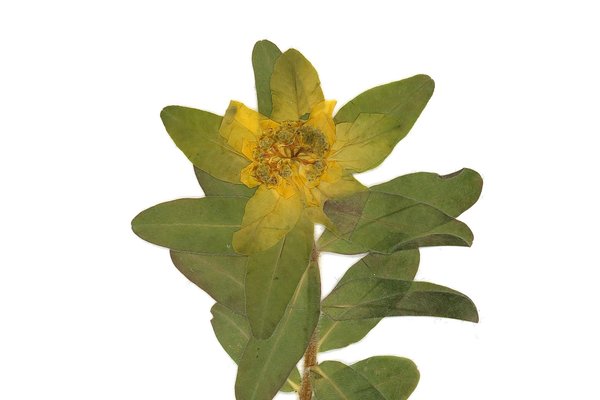
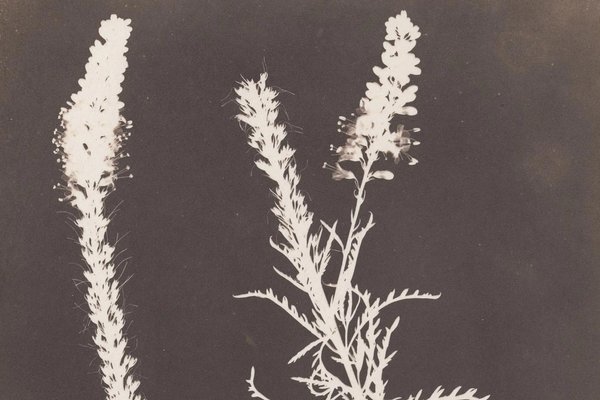
Nature printing is a historic technique for making images by taking impressions from natural objects such as leaves, ferns, seaweed, and other specimens. In this process, the surface of the plant itself becomes the matrix from which the image is produced, transferring fine detail directly onto a printing surface.
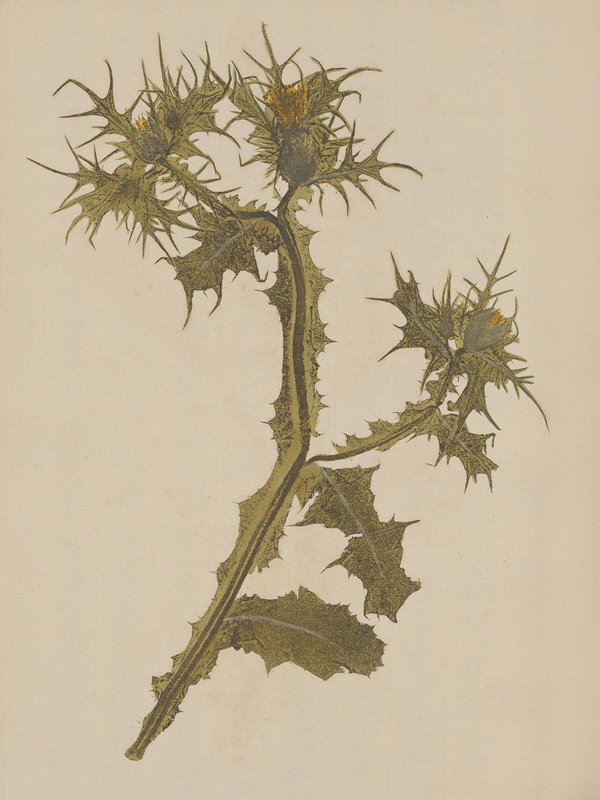
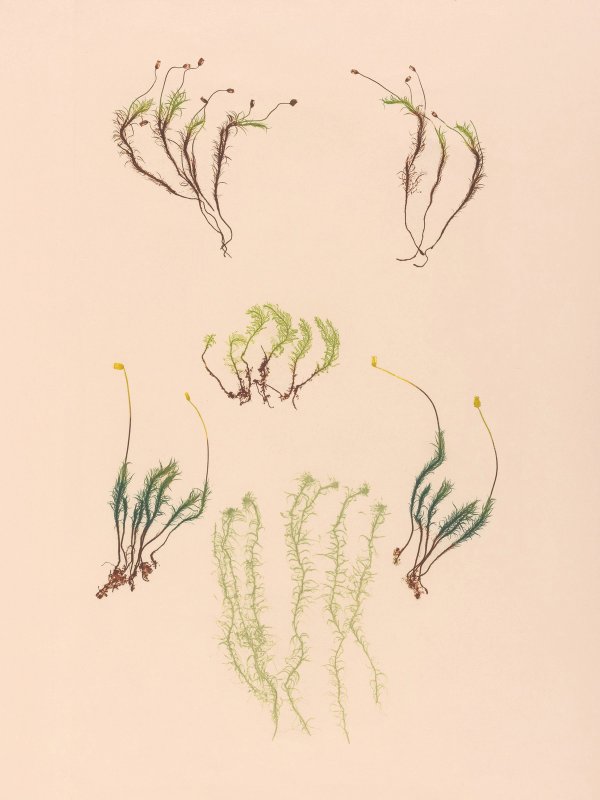
Early practitioners developed both direct and indirect methods. Direct impressions involve inking a specimen and pressing it straight onto paper so that texture, veins, and relief transfer immediately—for example, the Scolymus maculatus plate from Hieronymus Kniphof’s Botanica Originali (1762), where the thistle’s spines and leaf margins register as a unique physical trace. Indirect impressions use the inked plant to emboss a soft metal plate under pressure; this plate is then hardened, inked, and printed multiple times—as in Ludwig von Heufler’s Florae Cryptogamae (1853), where the Polytrichum moss shows refined, reproducible detail.
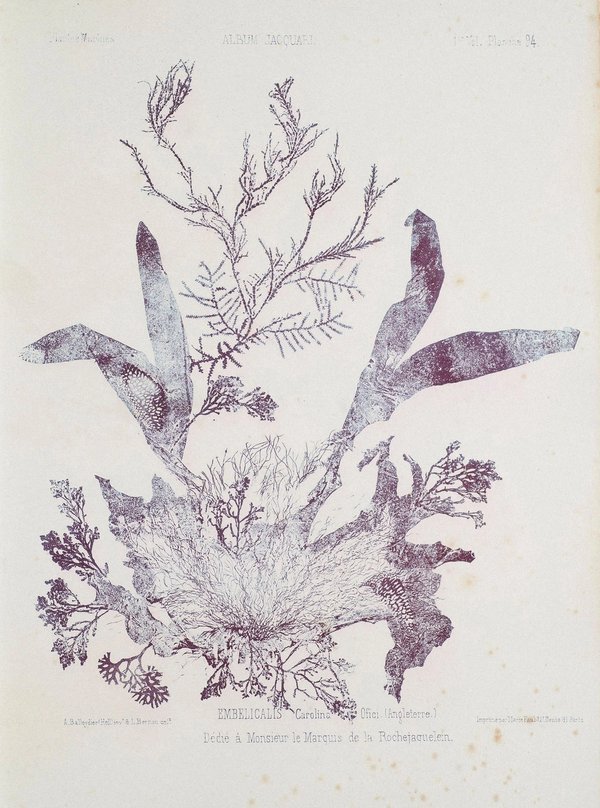
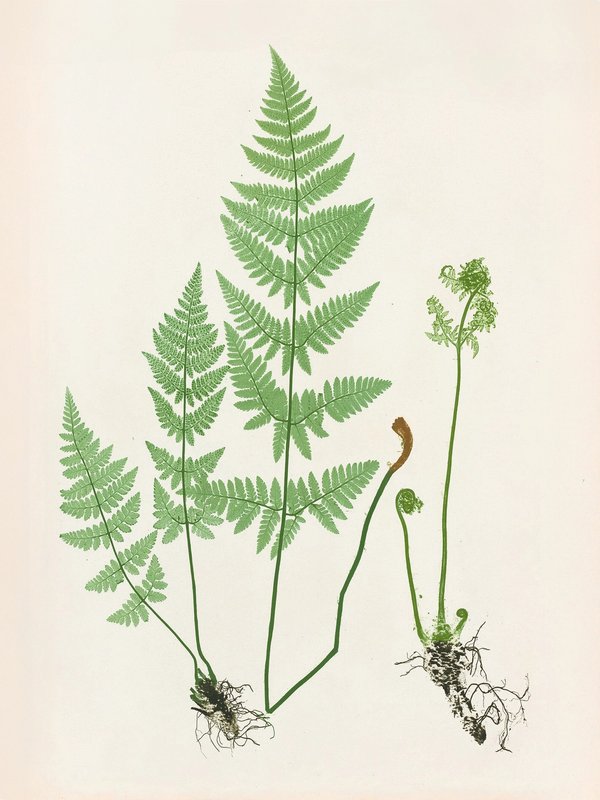
Throughout the nineteenth century, nature printing was widely used in botanical literature to record species with exceptional accuracy. Works employing this technique presented lifelike images that revealed venation, margins, and surface texture in ways that rivalled hand engraving and botanical illustration—for instance, Augustin Balleydier de Hell’s Flore des dessinateurs (1856), featuring Embelicalis Carolina; Henry Bradbury’s The Ferns of Great Britain and Ireland (1855), with Lastrea spinulosa; or Constantin von Ettingshausen and Alois Pokorny’s Physiotypia Plantarum Austriacarum (1873), with Millium effusum and other Austrian vascular plants. Botanists and printers collaborated to refine these approaches, producing printed collections of ferns, seaweeds, and other specimens that served both scientific study and visual appreciation.
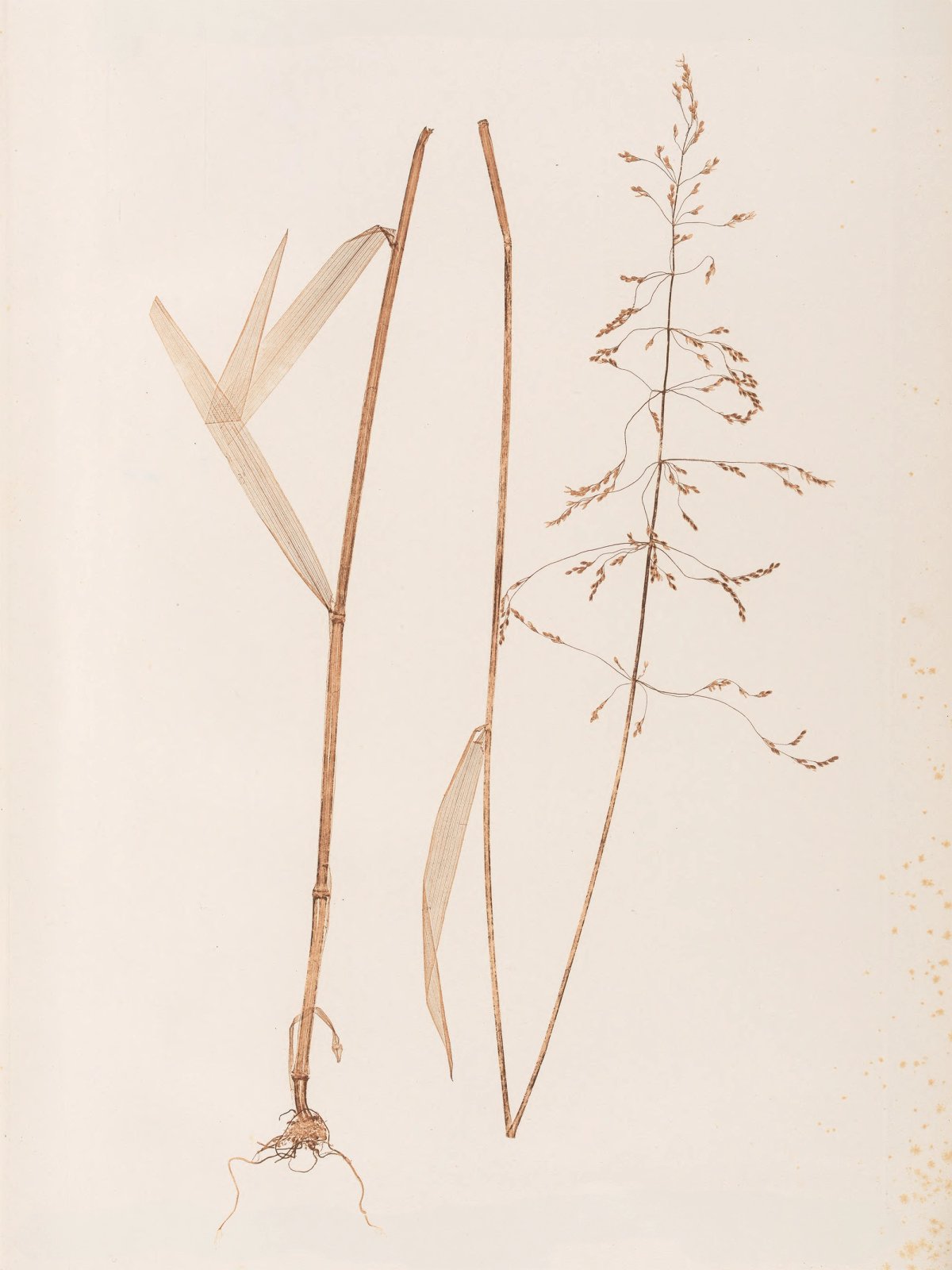
Millium effusum, Constantin von Ettingshausen und Alois Pokorny, Physiotypia Plantarum Austriacarum, 1873 [5]↓
The method bridges scientific observation and graphic representation: by using the object itself as the origin of the image, it preserves morphological detail without interpretive drawing, yet also creates a structured visual form suited for analysis. Today, nature printing is recognized both as a precursor to photographic processes and as a historical practice that foregrounds the natural design of specimens through direct contact with printing technology.
Sources
- [1] Scolymus maculatus, Hieronymus Kniphof, Botanica in Originali, 1762, Johann Hieronymus Kniphof, Johann Gottfried Trampe, Harvard University Botany Libraries, via Biodiversity Heritage Library[Link](accessed: 2026-03-10)↑
- [2] Polytrichum, Ludwig von Heufler, Florae Cryptogamae, Tabula V, 1853, Harvard University Botany Libraries, via Biodiversity Heritage Library[Link](accessed: 2026-03-10)↑
- [3] Embelicalis Carolina, Augustin Balleydier de Hell, Flore des dessinateurs, 1856, Paris, Susse Frères, Photo: Bidsquare Auctions[Link](accessed: 2026-03-10)↑
- [4] The ferns of Great Britain and Ireland; London; Bradbury and Evans; Whitefriars; 1855, Thomas Moore, Henry Bradbury, John Lindley; via Biodiversity Heritage Library[Link](accessed: 2026-03-10)↑
- [5] Millium effusum, Constantin von Ettingshausen und Alois Pokorny, Physiotypia Plantarum Austriacarum, 1873, Harvard University Botany Libraries, via Biodiversity Heritage Library[Link](accessed: 2026-03-10)↑