Water immersion is an imaging method in which a botanical specimen is submerged in clear water so it is illuminated evenly from all directions. The surrounding water acts as a soft optical medium: it reduces harsh highlights and deep shadows, allowing the plant’s form to be described with a calm, continuous tonal range rather than strong contrast.
In practice, the specimen is placed in a shallow tank or tray and gently arranged so key structures remain readable. Because water supports delicate tissues, thin leaves, petals, and filament-like parts can be spread without collapsing, and small curves or overlaps become easier to control. The result is a clear view of external morphology—edges, venation, branching, and surface transitions—without the visual interruptions that often come from dry mounting, gravity, or directional lighting.
As a documentation method, water immersion can make structural relationships more apparent by presenting the plant as a unified, softly lit object. At the same time, it introduces its own constraints: immersion can slightly alter posture, trap air bubbles on surfaces, and reduce the appearance of fine textures, so careful handling and clean water are essential to avoid artifacts.
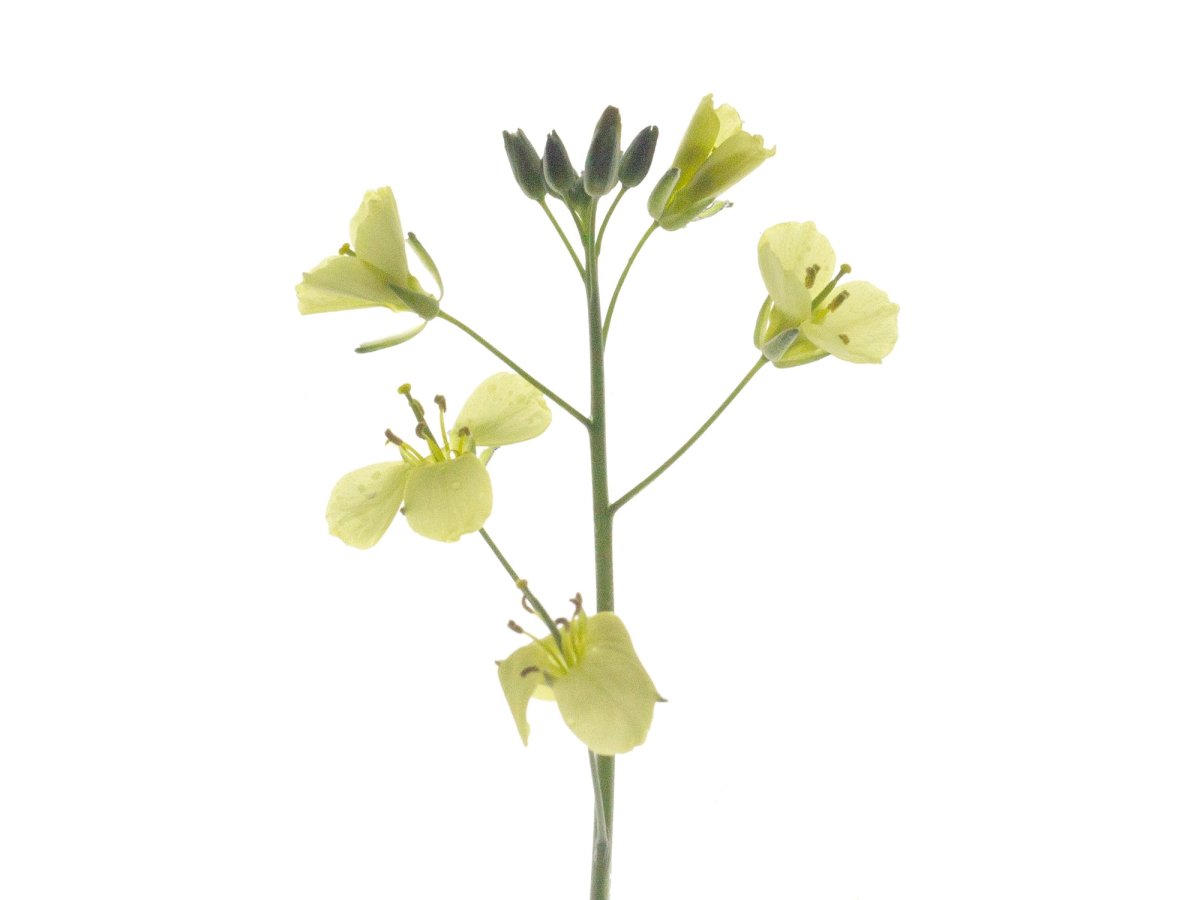
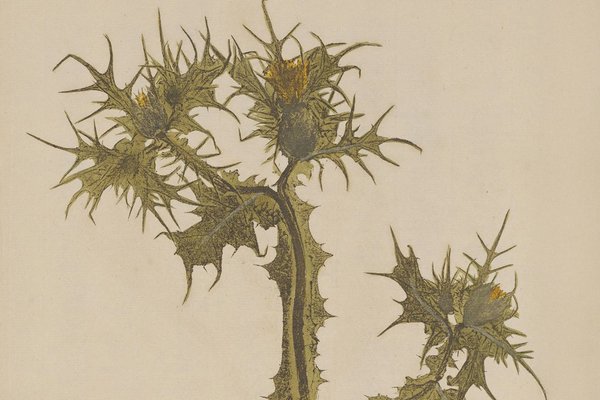
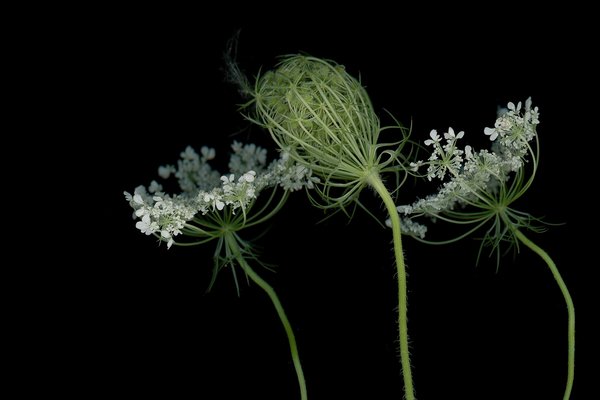
Diplotaxis tenuifolia, Detail of specimen collected in Stuttgart, Germany, 05/2022